 par
Contribution to the conference :
VIII International Conference, « Tangible and Intangible Impact of Information and Communication in the Digital Age, »
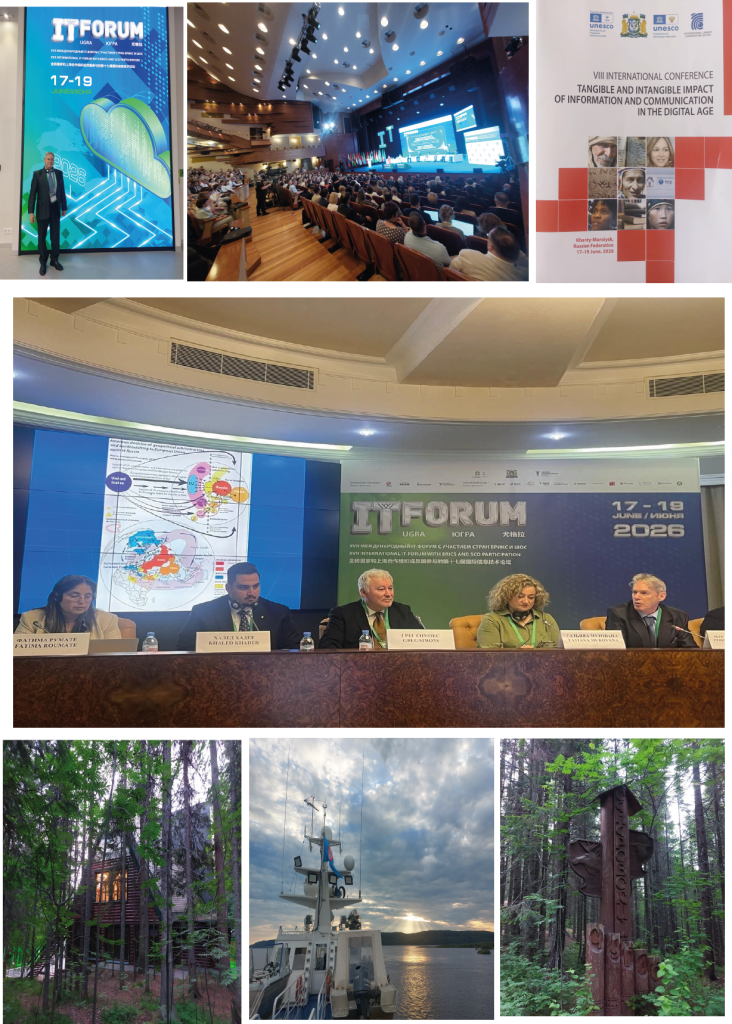
The VIII International Conference “Tangible and Intangible Impact of Information and Communication in the Digital Age” to be held in Khanty-Mansiysk, Russian Federation, on June 17-19, 2026, within the framework of the XVII International IT Forum with BRICS and SCO participation and as within the implementation in Russia of the UNESCO Intergovernmental Information for All Programme. The conference will be convened by the Russian UNESCO IFAP Committee and the Interregional Library Cooperation Centre in cooperation with the Government of the Khanty-Mansi Autonomous Area – Ugra, the Permanent Delegation of the Russian Federation to UNESCO, and the Commission of the Russian Federation for UNESCO. This high-level forum is expected to gather some 150 participants from over 50 countries: politicians, diplomats, executives and specialists of institutions for language and multilingualism promotion – authorities and institutions of education, culture, science, communication and information, publishing houses and booksellers, the media, as well as NGOs and the private sector. The main goal of conference is to serve as a platform for expert discussions and to ensure further in-depth study of socio-cultural transformations occurring at the global, regional and local levels due to the development of IT and the impact of changes in the sphere of information and communications, in particular on various sectors and fields
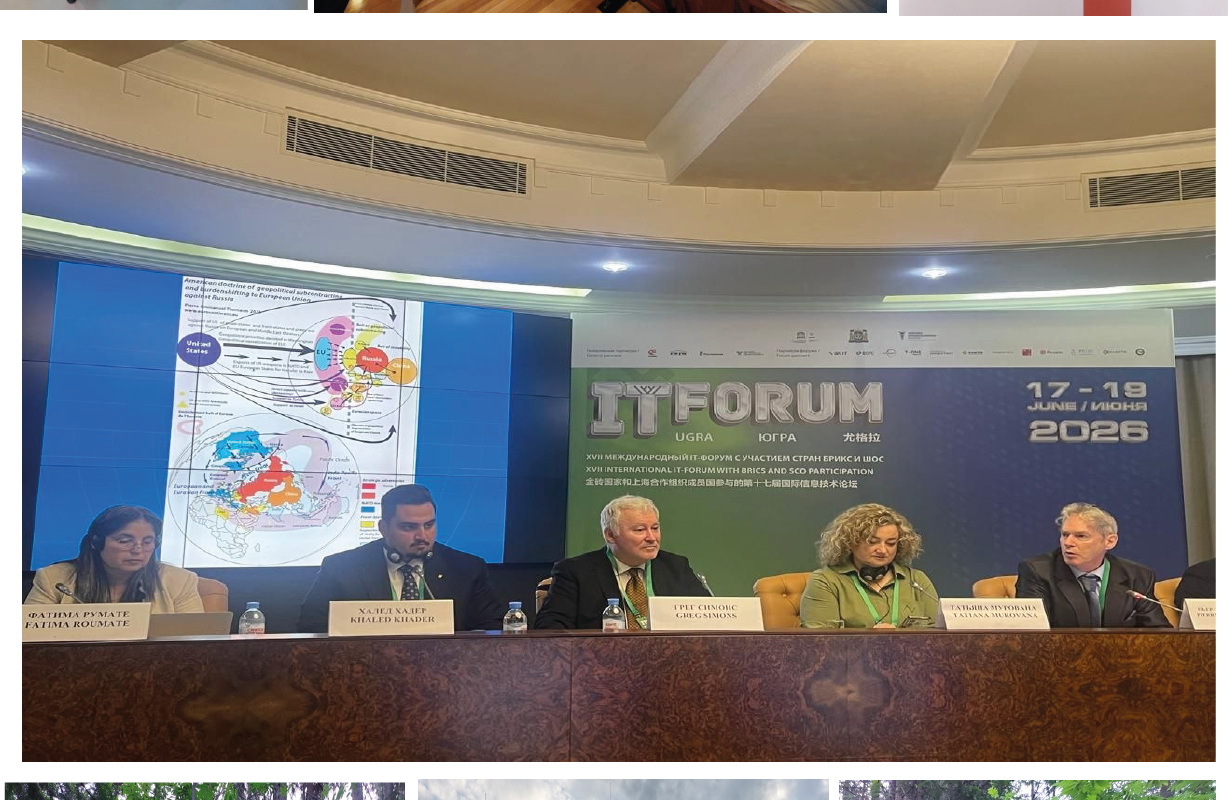
Digitalization and Artificial intelligence as a geopolitical tool, can BRICS and EU countries promote more cooperation to face this new challenge?
The increasing use of AI as a geopolitical weapon through the destabilization of IPS may contribute to determining the geopolitical order in the 21st century. With the emergence of “digital empires», and the use of malicious use of artificial intelligence (MUAI) as a systemic level) it will transform the paradigms of geopolitics by adding a new spatial dimension, spatio-temporal dimension, leading to a new era of geopolitical rivalry for control of territories and their populations
Great powers that can implement AI-enhanced strategies leading to multiple areas of supremacy in spatial dimensions such as the land, maritime, air, cybernetic, spatial, and cognitive domains and time gains, with their anticipation capacity favoured by predictive analysis, could lead to an overthrow of the international order or make stabilization impossible
BRICS, EU countries and US are engaged in the process of containing MUAI at different speed and levels. However, both BRICS and EU countries, are facing the challenges posed by the strategic use of MUAI. But if they are engaged in exclusive alliances or incompatible individual positioning, there is a risk that they might promote geopolitical polarization.
International cooperation will be better achieved if based on a better geopolitical balance, and more common geopolitical representations but also on inclusiveness, respect and reciprocity regarding IA and digitalization between global actors like the BRICS, US, China, Russia and EU member states.
BRICS and EU should therefore focus more on questions of data sovereignty, geopolitical balance and policies with an appropriate Strategic communication to counter threats to the international system by AI used as a geopolitical tool ( MUAI at strategic level) .
To avoid the polarization of rival blocks of different states and multilateral organizations, what are the prospects for the promotion of a new geopolitical balance and also new multilateral cooperation on AI and MUAI and based on an ethical and human-centered order combined with a better geopolitical balance of power? How can Strategic communication help to face these challenges ?
Can states and international institutional actors, promote a new level of cooperation? By promoting new models for global AI cooperation between BRICS and EU, only then will AI as a geopolitical weapon and threats to the geopolitical system could be contained
International cooperation will be better achieved if based on a better geopolitical balance, and more common geopolitical representations but also on inclusiveness, respect and reciprocity regarding IA and digitalization between global actors like the BRICS, US, China, Russia and EU member states.
BRICS and EU should therefore focus more on questions of data sovereignty, geopolitical balance and policies with an appropriate Strategic communication to counter threats to International system by AI used as a geopolitical tool (MUAI at strategic level).
International cooperation is also necessary (under UN/UNESCO coordination, BRICS, or other international format)on forward-looking threat assessments, including the mapping of the AI threat landscape associated with Cognitive Warfare and global cooperation in building projects using AI to counter MUAI.
An international research centre in Khanty-Mansyisk on the risk of MUAI and its threat to IPS, but also cooperation on the development of Information technology tools and AI technologies to improve societies in terms, of health, education, environmental challenges, industry, energy could be promoted by States from BRICS countries with other states interested in these new challenges.